
Gulf Aquaculture
Transforming Aquaculture in the Middle East
By Pivoting to Local Species
About Us
About Us
Gulf Aquaculture, a subsidiary of the Emirates Consortium LLC (“EmCon”), is pioneering the future of sustainable seafood in the region. Established in January 2023 on a private island in Abu Dhabi, the company operates a state-of-the-art marine fish hatchery specializing in the production of high-value, endemic species, including the Red Snapper (Lutjanus malabaricus), Mangrove Red Snapper (Lutjanus argentimaculatus), and the Orange-spotted Grouper (Epinephelus coioides). Our mission is powered by a globally sourced team of leading aquaculture experts dedicated to biological excellence.
In 2024, Gulf Aquaculture achieved a critical industry breakthrough by successfully scaling the production of Orange-spotted Grouper larvae and fry for commercial farms throughout the Gulf. This pilot facility boasts an annual production capacity of two million larvae, supported by a fully integrated water quality and microbiology laboratory. We employ a rigorous, science-driven approach to biosecurity, utilizing a pristine, naturally filtered seawater system sourced from on-site boreholes, ensuring optimal health without reliance on chemical treatments.
Our trajectory is one of ambitious, strategic growth. To meet rising regional demand, we are actively expanding our Balghailam Island operations to significantly increase fry production capacity. This expansion solidifies our commitment to scalable and environmentally responsible practices, positioning Gulf Aquaculture as the preeminent hatchery in the Gulf’s burgeoning aquaculture sector.
In a landmark development, Gulf Aquaculture was awarded a long-term lease for the prestigious Sheikh Khalifa Marine Research Centre (SKMRC) in Umm Al Quwain by the UAE Government in November 2025. This acquisition of one of the largest and most advanced marine hatcheries in the region represents a transformative leap in our production capabilities. Beyond scale, the SKMRC incorporates a unique Marine Innovation Park, featuring 16 high-tech marine biology laboratories. This collaborative ecosystem is designed to attract world-class scientists, fostering groundbreaking research in marine biology and environmental science that will catalyze the sustainable growth of aquaculture across the UAE and the wider region.
vision & Mission
Vision
To be the premier catalyst for a self-sustaining Gulf aquaculture ecosystem. We envision a future where the Arabian Gulf, Oman Sea, and Red Sea are global benchmarks for marine innovation, powered by the natural resilience of indigenous species and cutting-edge ecological stewardship.
Mission
Our mission is to fortify regional food security by pioneering the production of high-quality, locally adapted marine fish fry. By bridging the gap between advanced biotechnology and sustainable farming practices, we provide the essential foundation that empowers regional fish farmers to achieve long-term commercial success and environmental harmony.
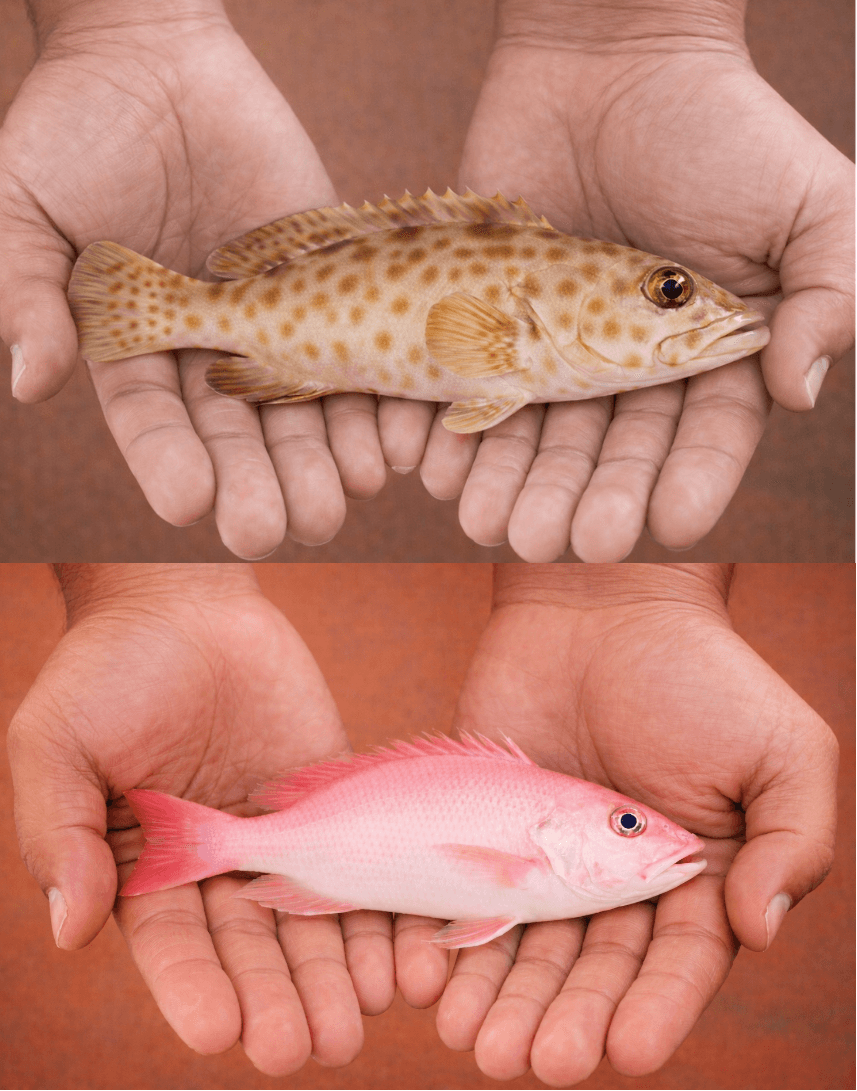
our Species
01. Grouper
Orange-Spotted Grouper, Epinephelus coioides
Grouper is a high-value species commonly stocked in marine cage systems, known for its firm texture, strong market pricing, and cultural importance across the GCC and Asia. Our Grouper fry are produced through controlled broodstock, larval, and nursery phases to support consistent size grading, stable early feeding behaviour, and smooth transfer into nursery tanks or sea cages. Because Grouper is native to regional waters, it demonstrates good resilience to local salinity and temperature ranges, reducing biological risk for downstream farms.
02. Red Snapper
Mangrove & Malabar Snappers, Lutjanus spp.
Red Snapper is a hardy warm-water species with favourable growth characteristics, attractive culinary traits, and strong commercial acceptance in Middle Eastern markets. It adapts well to low-density cage systems and properly managed land-based systems, making it suitable for farms seeking efficient feed conversion and predictable harvest values. Our Red Snapper fry are reared using live feed systems and microbiology monitoring during the larval phase, supporting stable development during the most sensitive stages of early growth.
03.Seabream
Sparus aurata and regional warm-water variants
Seabream remains an important species across the GCC, the Mediterranean, and parts of Asia due to its established culinary acceptance and well-understood farming protocols. While Seabream generally prefers slightly cooler temperatures than Grouper and Snapper, it remains one of the most commonly farmed marine species in the region. Our Seabream fry support farms operating mixed-species production, retail supply chains, and hospitality segments where Seabream retains consistent consumer demand.
Our production
01. what we produce
We produce hatchery-raised fry for Grouper, Red Snapper, and Seabream. Each batch is reared through broodstock management, larval rearing, and nursery phases within controlled environments that allow for careful handling and development during the most sensitive early life stages. By supplying fry rather than attempting to operate the full grow-out value chain, we enable marine farms, distributors, and processors to build their operations on a foundation of consistent and regionally suited juvenile supply. This model supports ecosystem-level reliability by reducing dependency on wild-caught juveniles and lowering the operational risk associated with importing fry from overseas.
02.How we produce
- One of the world’s largest and most technologically advanced marine fish hatcheries, based at the Sheikh Khalifa Marine Research Centre in Umm Al Quwain, supported by a pilot hatchery on Balghailam Island
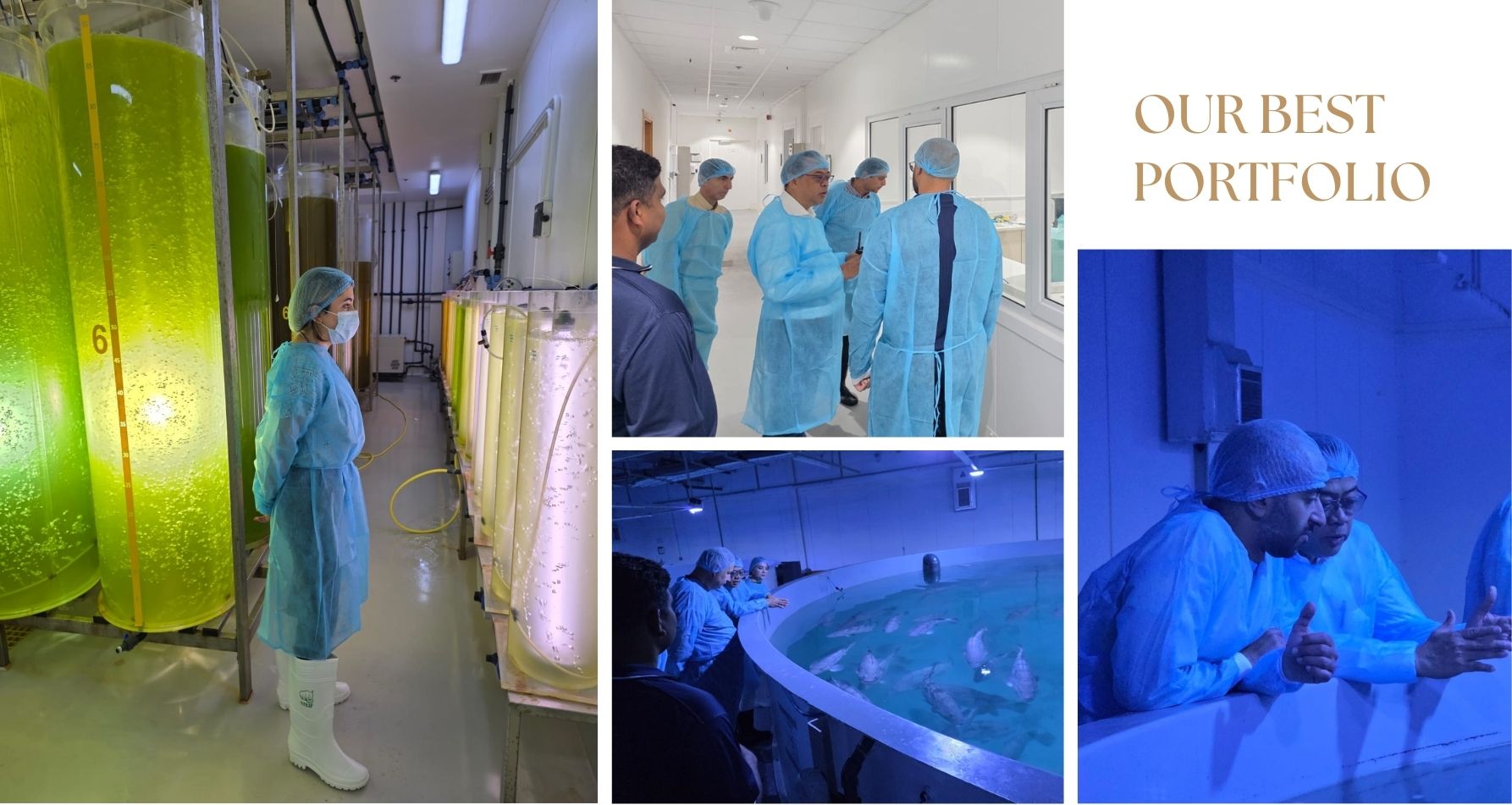
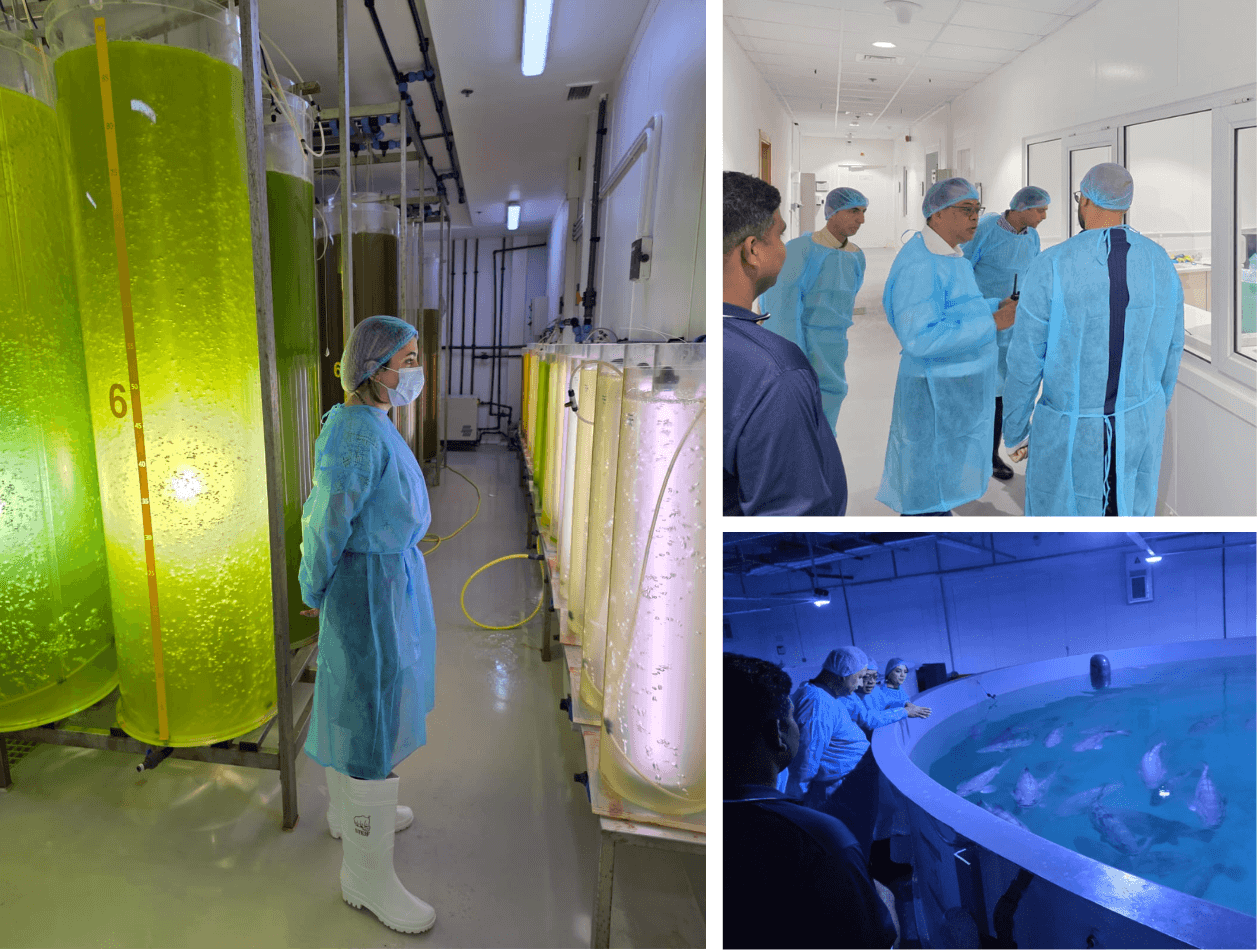
- Fully integrated facilities managing broodstock, live feed systems, larval rearing, nursery conditioning, and dedicated microbiology and virology laboratories
- Broodstock maintained under controlled environmental conditions to support consistent spawning cycles and preserve genetic diversity
- Larval rearing supported by in-house cultures of live feeds, including rotifers, copepods, and microalgae, with continuous microbiological testing for stability and suitability
- Continuous monitoring and control of water quality parameters such as temperature, salinity, dissolved oxygen, and microbial balance
- Structured nursery phase with gradual feed weaning, behavioural conditioning, and size grading to ensure uniform and resilient fry
- End-to-end hatchery management that minimizes stress, improves survival and predictability, and delivers healthy, high-quality fry to customers
why local species wins the gulf
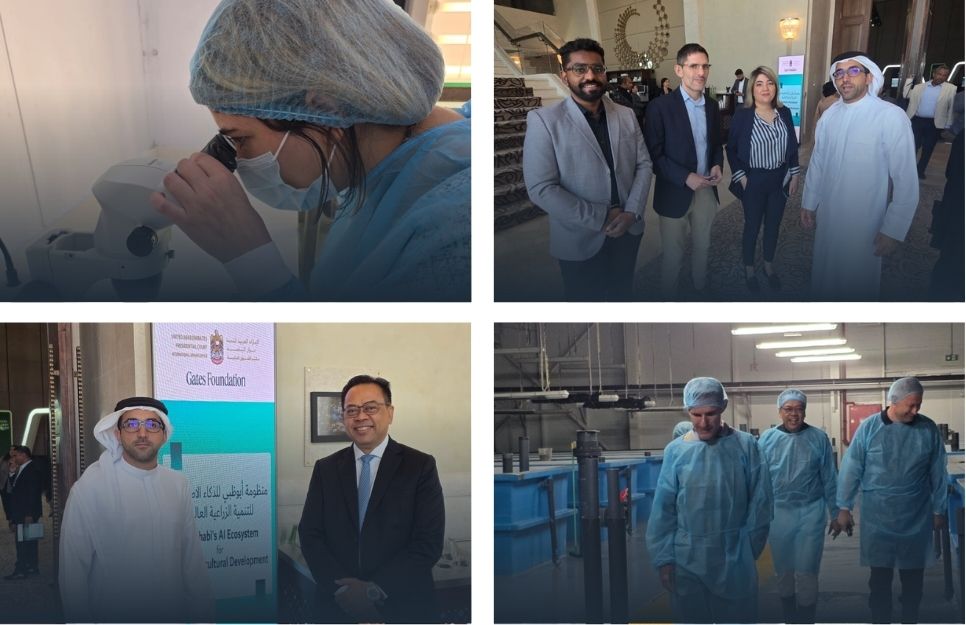
Aquaculture success in the Gulf region is strongly influenced by the compatibility between farmed species and environmental conditions. Local and regionally adapted species have evolved to survive in waters characterised by high salinity, elevated temperatures, and natural seasonal variation.
When species are biologically suited to their environment, they experience lower stress levels, improved immune response, and more stable growth performance. This translates directly into higher survival rates, reduced operational complexity, and lower long-term costs for aquaculture operators.
By focusing on local species, farms can reduce reliance on energy-intensive cooling systems and excessive water treatment, resulting in more sustainable and economically viable production models. Additionally, these species are already familiar to regional markets, supporting consumer acceptance and market stability.
Local species are not simply an alternative option – they represent the most practical and resilient pathway for aquaculture development in the Gulf.
our species logic
Marine aquaculture in the Middle East operates in an environment that is both biologically unique and operationally challenging. The Gulf is characterised by high salinity, elevated summer temperatures, and seasonal variability, all of which place significant stress on marine organisms that are not adapted to these conditions. Many imported species require extensive environmental modification, including chilled water systems, specialised feeds, or controlled land-based facilities, which increases capital and operational costs and can make projects less sustainable or commercially viable over time.
Native and regional species such as Grouper and Red Snapper, on the other hand, have evolved within these conditions and are therefore biologically suited to the warm and saline waters of the Gulf and broader Indian Ocean region. They exhibit better tolerance to temperature fluctuations, salinity levels, and local pathogens, which reduces biological risk and improves performance during grow-out. Seabream complements these species by offering strong commercial demand and well-established farming protocols, allowing farms to supply both premium and high-volume markets within the GCC.
Focusing on native and regional species also has environmental and food system benefits. It reduces pressure on wild stocks by providing a hatchery alternative to wild-caught juveniles, supports food security by shortening supply chains, and decreases reliance on imported fry, which can be unpredictable in cost and availability. By matching species to local environments rather than modifying environments for non-native species, this approach aligns aquaculture with ecological realities, operational efficiency, and long-term sustainability.
get in touch
Website
Address
- Head Office - 7th Floor, East Tower, Abu Dhabi Mall, P.O. Box 55345, Abu Dhabi, UAE